

The Types of CBD Products
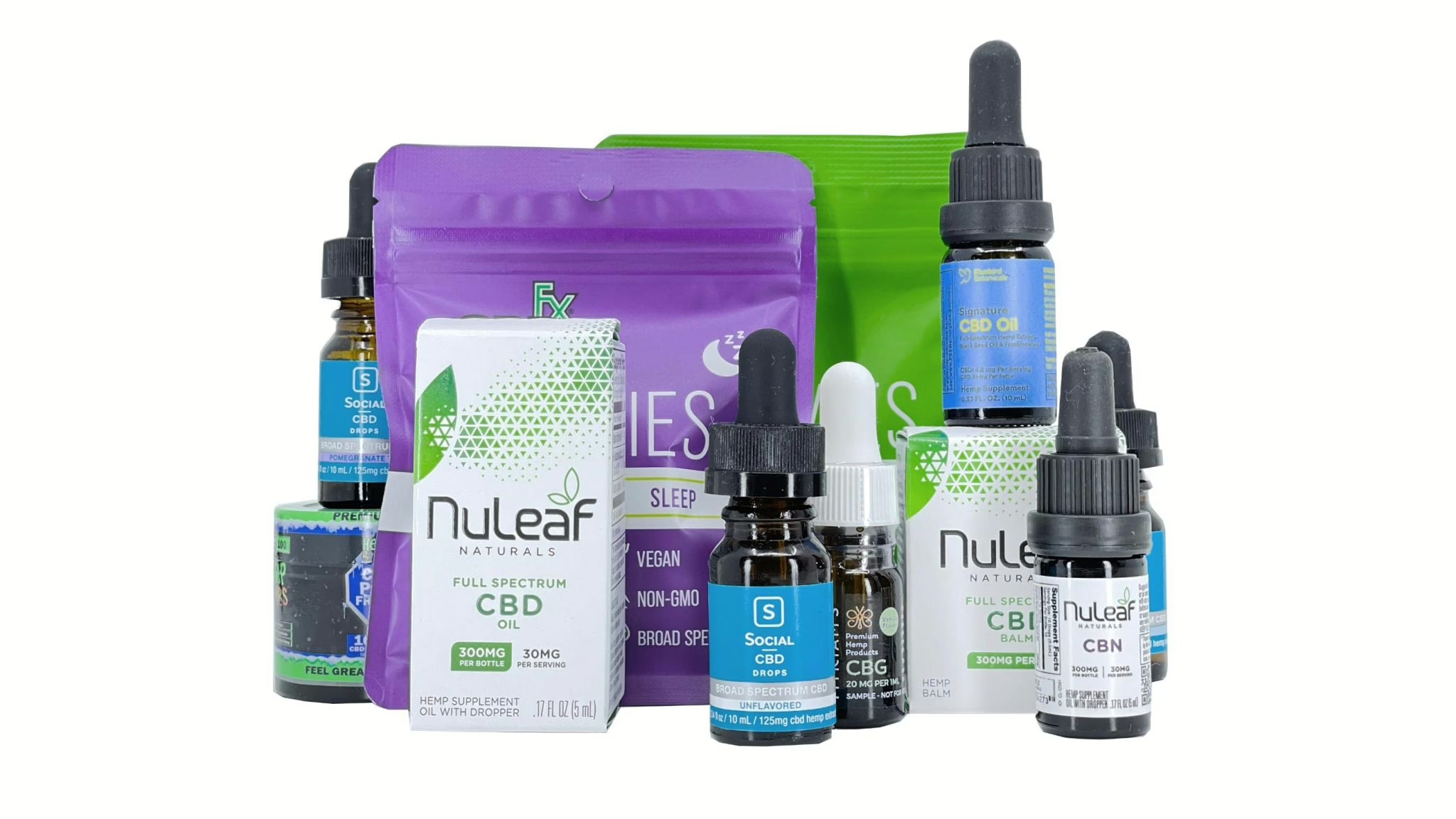
CBD products generally fall into two categories: extract type and product format. Understanding both can make it easier to compare labels, evaluate ingredients, and choose an option that fits your preferences. This guide breaks down the main differences in a simple way, so you can shop with more confidence.
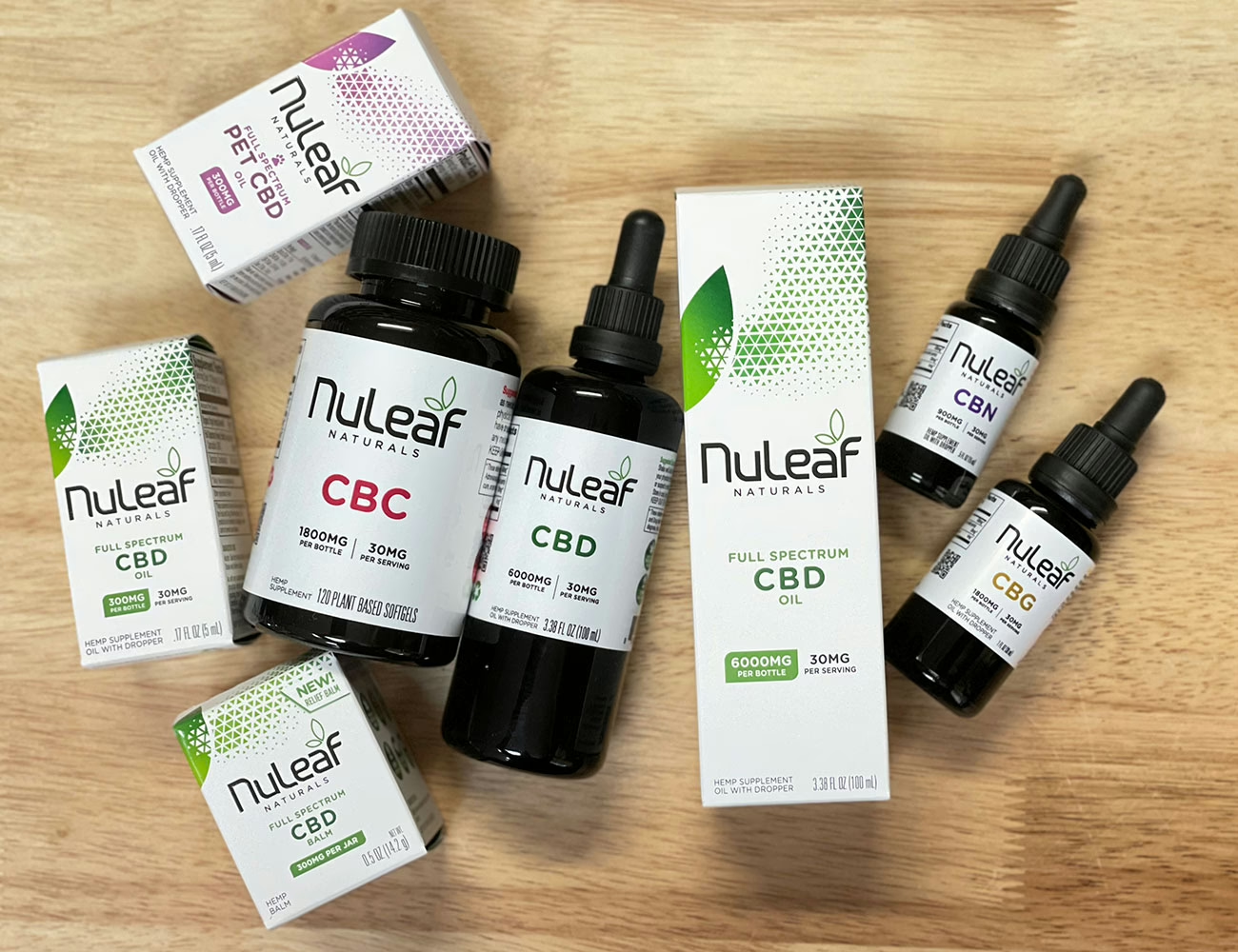
TL;DR (Too Long; Didn’t Read):
CBD products vary in two main ways: the type of extract they use and the form they come in. The three main extract types are full spectrum, broad spectrum, and isolate, while common product formats include oils, gummies, capsules, and topicals.
Table of Contents
What is CBD?
CBD, or cannabidiol, is one of 104 chemical compounds known as cannabinoids found in the industrial hemp plant. Industrial hemp is closely related to the marijuana plant. Both are classified botanically as Cannabis Sativa. However, it’s the cannabinol tetrahydrocannabinol (THC) in the marijuana plant that is psychoactive and responsible for the feeling of being high.
Industrial hemp is a Cannabis plant that has less than 0.3 percent THC, the psychoactive compound in cannabis plants. In general, the age requirement to purchase CBD products is 18 or 21 at the state level.
The Gallup survey shows that 14% of U.S. adults use CBD products, 40% of users use them for relief, and 11% for sleep.
What Are the Main Types of CBD?
When people talk about the main types of CBD, they usually mean the type of hemp extract used in the product. There are three main types of extracts: full spectrum, broad spectrum, and isolate.
✔ Full spectrum CBD
This extract contains all the compounds in the hemp plant. They include CBD, THC up to the legal limit of 0.3%, minor cannabinoids, flavonoids, and terpenes.
✔ Broad spectrum CBD
This CBD extract has all of the compounds in the hemp plant, except one. THC is removed during processing. Products are THC-free or have only a non-detectable trace amount of THC.
✔ CBD isolate
This is pure CBD. All other cannabinoids and compounds are removed during the extraction process.
Full-spectrum vs Broad-spectrum vs Isolate
These three CBD extract types differ in what they contain and how they appear on a product label. A quick side-by-side comparison can help clarify the roles of other cannabinoids, whether THC is present, and which option may suit best.
| Type | Contains other cannabinoids | THC | Best for label readers looking for | Notes |
|---|---|---|---|---|
| Full spectrum CBD | Yes | Yes, trace amounts | A whole-plant profile with multiple hemp compounds | Includes CBD along with other naturally occurring cannabinoids and terpenes. |
| Broad spectrum CBD | Yes | Typically no THC | Multiple hemp compounds without THC | Often chosen by people who want more than CBD alone but prefer to avoid THC. |
| CBD isolate | No | No | CBD only | The most refined form of CBD, with no other cannabinoids or terpenes. |
Full Spectrum vs Broad Spectrum vs CBD Isolate: How To Choose the Best CBD Spectrum Type?
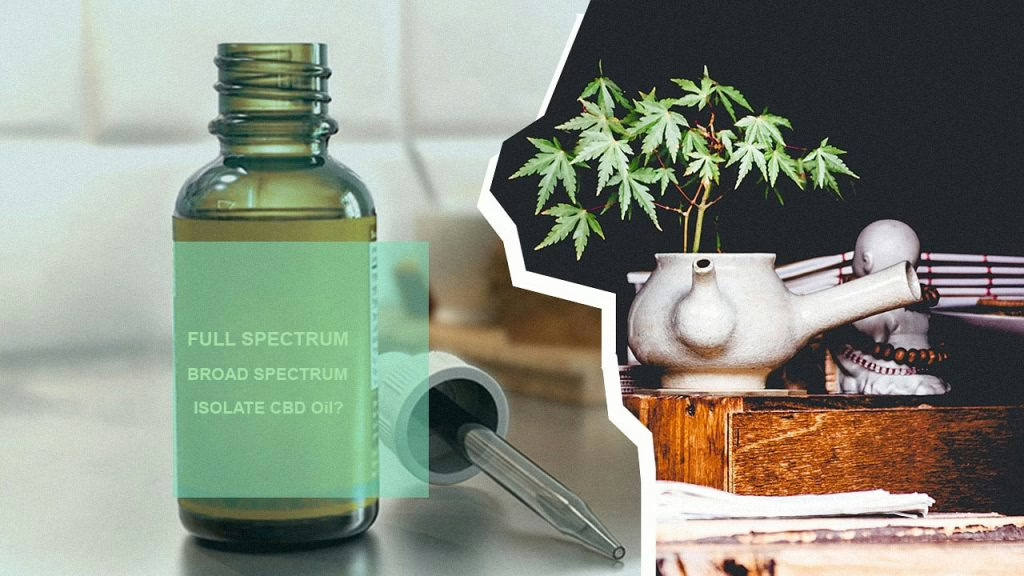
CBD Extract Type vs. CBD Product Form
There is a difference between the type and the form of the CBD product. The extract type refers to the chemical composition of the CBD used in the product. The hemp plant is the source of the CBD extract. Common extraction methods used today are supercritical CO2 extraction and ethanol extraction. The product form is how the CBD extract is delivered.
The three types of CBD extracts are used in all the product forms, such as oils, tinctures, gummies, capsules, softgels, topicals, etc. For example, a CBD tincture may contain full spectrum CBD extract while a gummy may contain broad spectrum CBD extract.
Common CBD Product Forms
1. CBD Oils and Tinctures
CBD oils and tinctures are top-selling products. These products are versatile because a user can adjust the dosage as desired. CBD oil is taken orally. However, it can also be taken sublingually by placing drops under the tongue. A third method of consumption is mixing CBD oil into drinks and foods.
CBD tinctures are designed to make taking a precisely measured dose of the CBD oil sublingually easy. Sublingual means the oil is placed under the tongue, so it is absorbed faster through the mucous membranes.
Oils and tinctures are frequently preferred by experienced users who want to control the CBD dose and experience quicker effects than CBD products that go through the digestive system. The dose is controlled by measuring the number of drops taken. It takes approximately 30-60 minutes for the CBD effects to begin.
2. CBD Edibles
CBD edibles include food items such as gummies, candies, mints, lollipops, lozenges and honey. CBD gummies sales are growing rapidly. They already account for the largest share of CBD edibles. Some market research companies predict they will become the top-selling product category because of their convenience, flavor and wellness benefits.
Except for honey, the CBD edibles have a pre-measured amount of CBD in each dose. Edibles must be digested and the CBD metabolized in the liver, so the CBD effects take longer to be felt. It can take 30 minutes to two hours to experience the effects. However, the effects will last longer because of the slower CBD distribution process.
3. CBD Capsules and Softgels
CBD capsules and softgels are another product form experiencing rapid sales growth. They offer precise CBD dosing. Capsules have encapsulated CBD extract. The capsule shell is made with cow or pig gelatin or plant cellulose. Most high-quality CBD capsule shells today are plant-based and vegan-friendly. The shell may be one or two pieces. If it is two pieces, it can be pulled apart and the contents added to food or drinks.
The softgels contain CBD oil and other ingredients. The softgel shell is usually made with a blend of gelatin, glycerin, and water. However, vegan-friendly softgels have shells made from a starch, such as tapioca starch, cassava root extract, or modified cellulose.
4. CBD Topicals
CBD topicals are applied to the skin. There are lotions, creams, balms and salves, balm sticks, gels, bath bombs and salts, and patches. Most products are used to soothe a localized area of skin or a joint. The CBD interacts with the skin’s cannabinoid receptors, but, with one exception, it does not reach the bloodstream. The one exception is the CBD patch. The CBD does get absorbed deep enough to reach the bloodstream.
5. CBD Drinks
CBD drinks include coffee, tea, and hot chocolate. There are also mixes, such as an electrolyte CBD drink mix that helps with hydration.
6. CBD Isolate Powders
A CBD powder is typically CBD or CBDa isolate. The powder form contains a high concentration of CBD. You can take it sublingually by placing a small amount of powder under the tongue or add it to food or drinks. The sublingual method delivers the fastest absorption of the concentrated CBD.
7. CBD sprays
CBD body sprays make it easy to reach hard-to-reach spots on the body. Many are formulated with ingredients like menthol to provide cooling. Oral sprays dispense oil directly into the mouth.
8. CBD pet products
CBD pet products include CBD dog and cat treats, dog calming chews, CBD oil for dogs and cats, and pet spray.
FAQs
What Are the Three Main Types of CBD?
The three main types of CBD are full spectrum, broad spectrum, and isolate. Full spectrum CBD contains CBD along with other naturally occurring hemp compounds, including trace amounts of THC. Broad spectrum CBD also includes multiple hemp compounds but is typically made without THC, while CBD isolate contains only CBD.
What Is the Difference Between CBD Type and CBD Form?
CBD type refers to the kind of hemp extract used in the product, such as full spectrum, broad spectrum, or isolate. CBD form refers to the format the product comes in, such as oil, gummy, capsule, or topical. For example, a gummy can be made with full spectrum CBD, broad spectrum CBD, or isolate.
Can Gummies Be Full Spectrum or Isolate?
Yes. Gummies can be made with any of the main types of CBD extract, depending on the formula. Some contain full spectrum hemp extract, some use broad spectrum extract, and others are made with CBD isolate, so it helps to check the label and third-party test results.
How Do I Compare CBD Oils and Gummies?
A good place to start is with the label. Compare the CBD amount per serving, the total CBD per container, the extract type, the THC content, the ingredient list, and the third-party COA. Oils may offer more flexible serving sizes, while gummies usually provide a fixed amount per piece and a more flavor-forward format.
What Should I Check Before Buying a CBD Product?
Look for the CBD amount per serving, total CBD per package, extract type, and whether the product contains THC. It is also helpful to review the ingredient list, serving size, and third-party certificate of analysis to confirm what is in the product and compare options more confidently.
Bottom Line
CBD products differ in two main ways: the type of extract they contain and the form they come in. Understanding the difference between full spectrum, broad spectrum, and isolate CBD, and then comparing formats like oils, gummies, and capsules, can make it easier to read labels and choose a product that fits your preferences.
Share this post

Ronald Phillips
Im looking for your best CBD as a sleep aid, can you help me with my choice,, ty Ron
Ronald w Phillips
needing a sleep aid CBD,, you help with your best would be nice, ty Ron
Alex Malkin
Hi Ronald. I recommend consulting with your physician or doing your own research on the review of CBD products for sleep here: https://cbd.market/cbdblog/the-best-cbd-products-with-melatonin-for-sleep. I also suggest checking out the products: https://cbd.market/contains/melatonin.
Mehmet
I would like to buy the most suitable and effective product for ****** patients, thank you for your help.