

What Are Flavonoids in CBD Products?
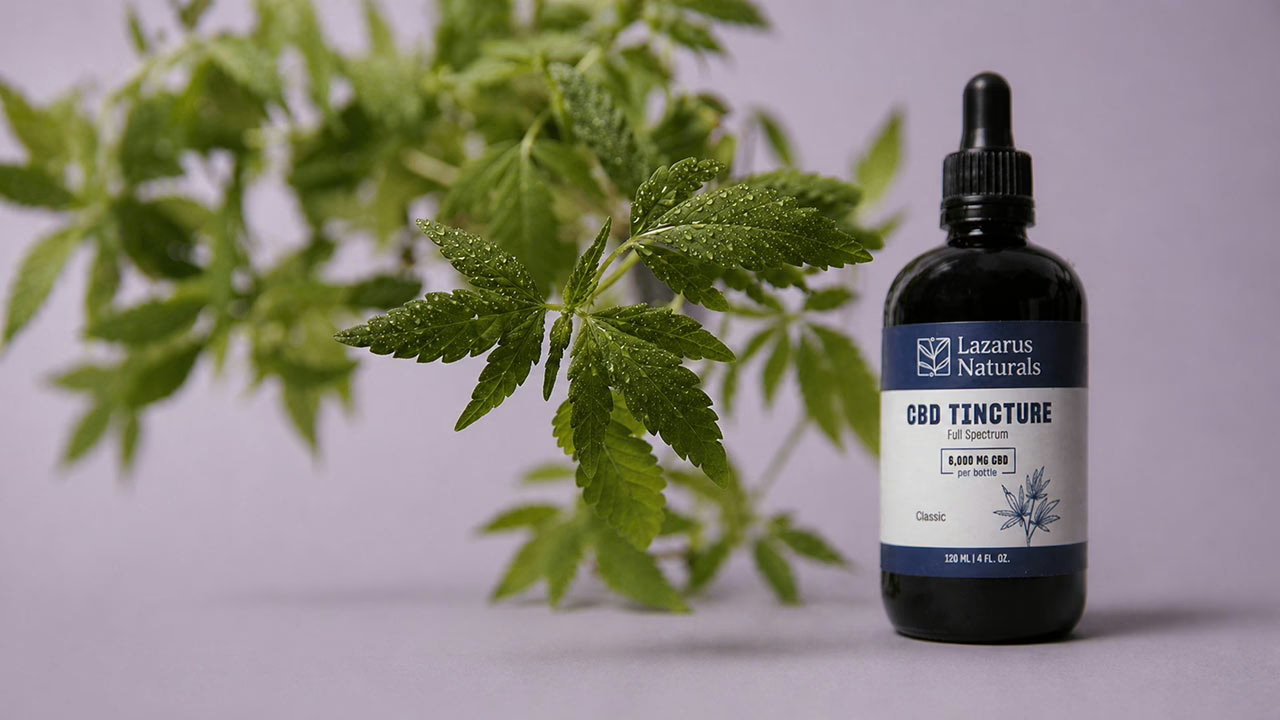
CBD (cannabidiol) is becoming a more familiar compound as millions of people turn to CBD products for a natural way to address various wellness issues. It gets a lot of attention, along with THC, as one of the major cannabinoids. Yet, the hemp plant offers a much more complex array of compounds that are increasingly studied for their potential to deliver unique benefits. These CBD plant compounds include flavonoids. The following sections explore what is known about flavonoids in hemp and how they may enhance CBD products.
TL;DR (Too Long; Didn’t Read):
Flavonoids are natural compounds found in plants, vegetables, fruits, and herbs. They contribute to the plant’s flavor, color, and environmental defense.
Flavonoids, cannabinoids, and terpenes are believed to work synergistically in full spectrum and broad spectrum CBD products to deliver enhanced wellness benefits.
Table of Contents
What are Flavonoids?
Flavonoids occur naturally in vegetables, fruits, grains, stems, roots, herbs, flowers, wine, and tea. They are major contributors to a plant’s flavor and color and help protect plants against weather extremes. They are called polyphenolic compounds, which are natural micronutrients or phytonutrients. Clinical research has found that flavonoids have many properties.
Hemp (cannabis sativa) is a plant and the source of CBD. Hemp plant flavonoids are mostly in the seedlings, leaves, and flowers. They are mostly undetectable in the seeds and roots. The flavonoids are called secondary metabolites because they are not part of the growth cycle. A secondary metabolite is a bioactive organic compound that develops to protect the plant and contribute to the plant’s ability to provide the wellness benefits CBD users appreciate. They contribute to the plant’s therapeutic potential.
There are over 20 different flavonoids that have been identified in cannabis sativa. The following are some of the major flavonoids.
- Flavones, including cannflavins A, B, and C
- Quercetin
- Apigenin
- Kaempferol
The cannflavins A, B, and C are unique to the cannabis sativa plants. They have been shown to have strong neuroprotective effects.
Flavonoids work together with cannabinoids, such as CBD and THC, terpenes, other polyphenols, and essential oils to increase therapeutic effects. This is called the entourage effect.
Think of it as the compounds boosting each other’s effects, which creates a greater overall effect. This means flavonoids interact indirectly with the endocannabinoid system (ECS), modulating the ECS activity.
Are Flavonoids the Same as Cannabinoids or Terpenes?
Cannabinoids, terpenes, and flavonoids are different compounds. They are all present in the hemp plant, but they are not the same. When you read a CBD product label, the various cannabinoids are listed as ingredients, but are flavonoids listed on CBD labels? No, flavonoids are not usually listed on labels, but they may be mentioned in marketing statements as a selling point.
Cannabinoids interact with the body’s endocannabinoid system, potentially providing wellness effects. There are numerous cannabinoids. CBD and THC are the most recognized, but others, such as CBG and CBN, are growing in popularity in CBD products.
Terpenes are the plant’s aromatic compounds. They are produced in the hemp plant’s trichomes, the resin of female flowers, and give the plant a flavor and scent profile. Terpenes protect plants from pests and environmental stressors. They are believed to contribute to the entourage effect with cannabinoids and flavonoids.
Which CBD Products Are More Likely to Contain Flavonoids?
The CBD products most likely to contain flavonoids are those made with whole-plant CBD extract. Full spectrum CBD products are made with a hemp extract that contains the most hemp plant compounds. These compounds include cannabinoids, flavonoids, and terpenes.
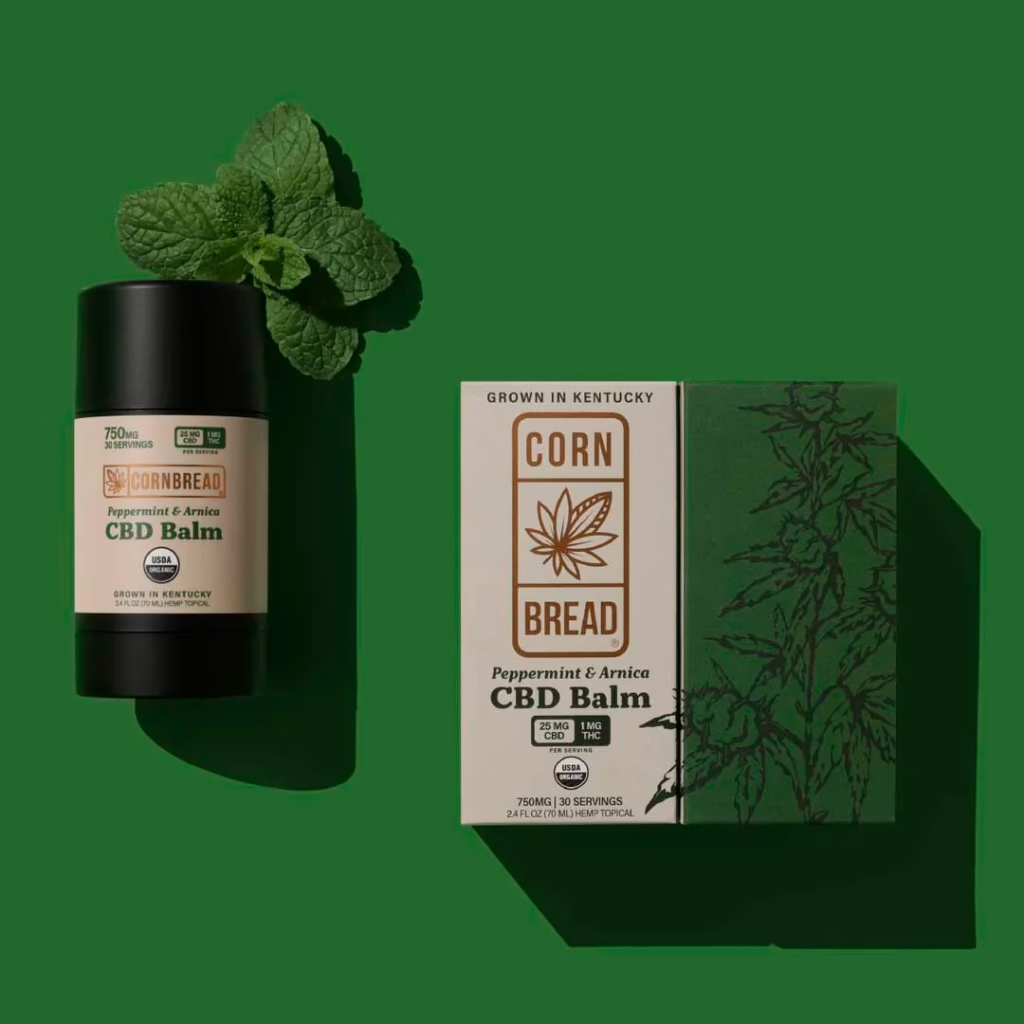
Broad spectrum CBD products contain flavonoids. However, the extra processing the CBD extract undergoes to remove THC may reduce the amount of flavonoids and terpenes. There are still enough to deliver the synergistic effects of flavonoids, terpenes, and cannabinoids. There are broad-spectrum CBD products that are specially processed to retain flavonoids.
Isolate CBD products will not contain flavonoids. The CBD extract is processed to produce pure CBD.
Can You See Flavonoids on a CBD COA?
Some Certificate of Analysis reports will list flavonoids, but many do not. The main focus of third-party lab testing of CBD product batches is to report cannabinoid potency by cannabinoid type and to assess the presence of heavy metals, solvents, and pesticides.
Unlike CBD testing, flavonoid testing is not standardized and not included in routine lab tests. Some specialized COAs may list major flavonoids. In that case, you want to look for the common flavonoids that contribute to the entourage effect. They include the cannflavins, quercetin, apigenin, luteolin, and kaempferol.
| Compound type | Examples | Commonly shown on COA? | Note |
|---|---|---|---|
| Cannabinoids | CBD, THC, CBG, CBN | Yes | Check potency and THC level |
| Terpenes | Myrcene, limonene, pinene | Sometimes | More common in flower and full-spectrum products |
| Flavonoids | Cannflavins, apigenin, luteolin | Rarely | Usually not a practical shopping filter |
FAQs
Are Flavonoids Found in CBD Oil?
Flavonoids are found in full spectrum and broad spectrum CBD oils. Isolate CBD oil contains pure CBD.
Are Flavonoids the Same as Terpenes?
Flavonoids and terpenes are the same in that they are both plant phytochemicals. As secondary metabolites, they help the plant adapt to environmental factors and protect it against pests and pathogens. However, they do have different chemical structures, and those differences mean they have different functions.
Flavonoids are phenolic compounds that provide the plant’s color. Terpenes are aromatic, volatile hydrocarbon compounds that enable the plant’s scent and flavor. Both types of compounds are being heavily researched for their potential therapeutic benefits.
Do CBD Gummies Contain Flavonoids?
Full spectrum and broad spectrum CBD gummies will contain flavonoids. CBD gummies made with full spectrum CBD extract will have the most flavonoids because the extract undergoes less processing than broad spectrum extract.
Should I Choose CBD Based on Flavonoids?
The flavonoids are just one factor to consider when choosing CBD products. If you want to take a whole-plant extract for its broad chemical profile and whole-plant wellness, then a full spectrum CBD product will be the best choice. Ingredients will contain all the cannabinoids, flavonoids, and terpenes of the hemp plant.
However, you would not choose a CBD product based solely on flavonoids. The cannabinoids in the product are more important. It is also a good idea to consider factors such as potency, brand reputation for transparency, and the availability of the COA prepared by a third-party lab.
Turning to Nature for Wellness
The research on the therapeutic benefits of flavonoids and terpenes continues. It is known that the hemp plant is rich in beneficial compounds. The flavonoids and terpenes play a role in the effects of full-spectrum and broad-spectrum CBD extracts, but the cannabinoids are the most important ingredients to consider. However, the other compounds likely enhance the effects due to the entourage effect. Flavonoids and terpenes are important compounds in whole-plant hemp extracts, which is why so many people prefer full-spectrum CBD product options. It is the best that Mother Nature has to offer.
Sources
- https://pmc.ncbi.nlm.nih.gov/articles/PMC5465813/
- https://pmc.ncbi.nlm.nih.gov/articles/
- https://pmc.ncbi.nlm.nih.gov/articles/PMC7931196/
- https://pmc.ncbi.nlm.nih.gov/articles/PMC5465813/#sec3
- https://pmc.ncbi.nlm.nih.gov/articles/PMC10714118/#s014
- https://pmc.ncbi.nlm.nih.gov/articles/PMC8284286/
- https://www.mdpi.com/1420-3049/29/2/410
- https://pmc.ncbi.nlm.nih.gov/articles/PMC11510081/
- https://pmc.ncbi.nlm.nih.gov/articles/PMC7763918/
Share this post
