

Do CBD Gummies Make You High?
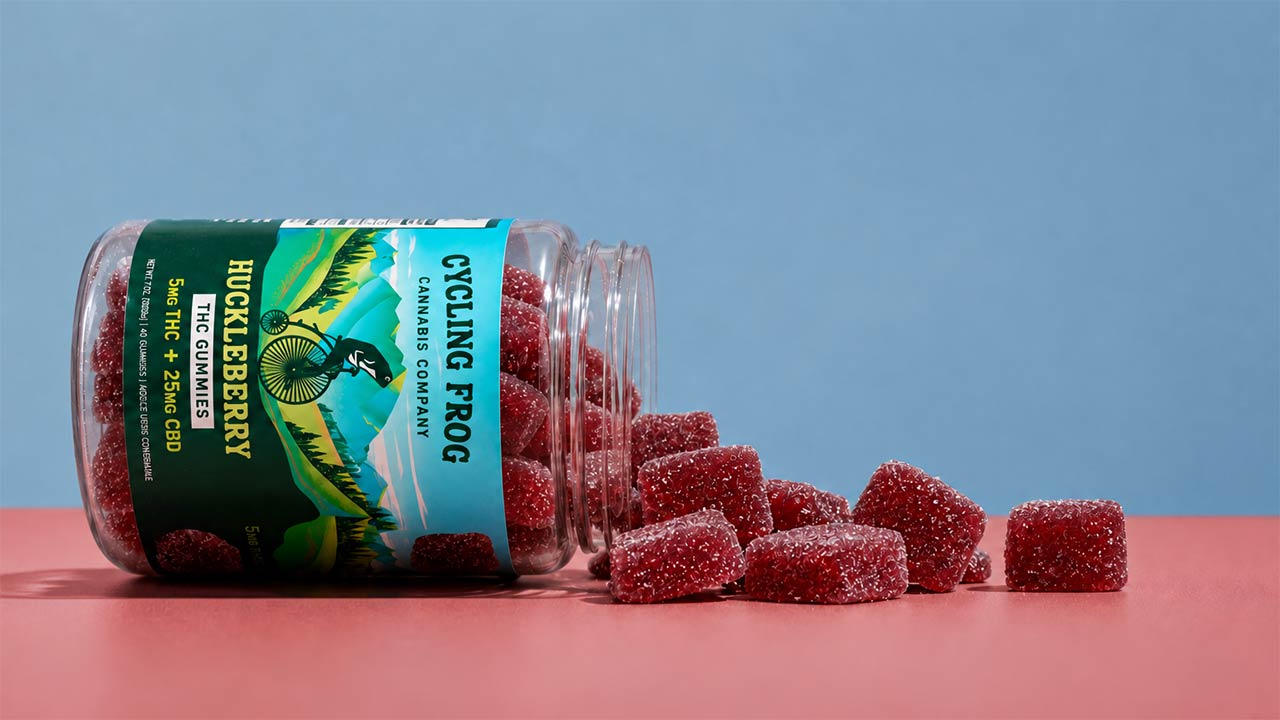
Do THC-free CBD gummies make you high? There is still confusion among CBD product shoppers concerning whether CBD gummies can make a person high. The quick answer is that CBD itself is not intoxicating like THC. CBD (cannabidiol) and THC (tetrahydrocannabinol) are both cannabinoids sourced from cannabis, but their effects are different. THC is the cannabinoid that causes a high. CBD is non-intoxicating. When you shop for CBD gummies, you will find that some gummies contain THC. Do these CBD gummies make you high? The answer is nuanced because many factors determine effects, from the amount of THC in the gummy to personal characteristics.
TL;DR (Too Long; Didn’t Read):
CBD gummies are psychoactive because anything that affects brain functioning is psychoactive.
CBD gummies that are THC-free will not cause intoxication.
Some gmmies contain trace THC from hemp, which federal law caps at 0.3% by dry weight; at a few milligrams per gummy most people feel no intoxication, though sensitivity varies with metabolism, medications and food intake. Savvy consumers buy their CBD gummies from reliable brands which list THC per gummy and publish a Certificate of Analysis (COA) from an independent lab.
Table of Contents
What Actually Creates the High?
An intoxicating compound is not the same thing as one that is psychoactive. Are CBD gummies intoxicating? They can be if they contain THC, which causes loss of normal functioning, control and a sense of euphoria. It is an intoxicating compound that causes the high. CBD is not intoxicating, so it cannot cause a high.
Are CBD gummies psychoactive? Yes, all compounds, including CBD gummies, are considered psychoactive because they affect the brain’s functioning and mental processes. Mood, thoughts, and perceptions may be impacted, but there is no high.
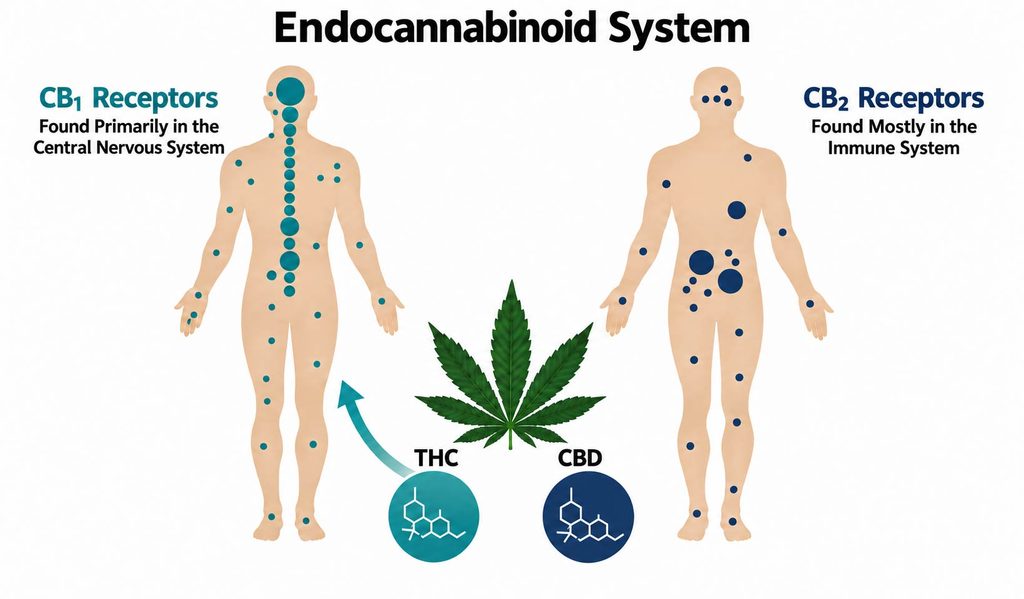
The brain has cannabinoid receptors, key components of the endocannabinoid system (ECS). The ECS is a regulatory system that works to maintain homeostasis in many biological processes, including discomfort, appetite and digestion, mood and stress, sleep, and immune response. The brain produces endocannabinoids (natural cannabinoids) as needed, and they are broken down quickly. The ECS has two main receptor types: CB1 and CB2.
The CB1 receptors regulate the chemical messaging among neurons. Neuronal signaling affects the body’s core functions, including mood and emotion. CB2 receptors in the brain regulate immune responses.
CB1 is the primary target of THC. THC binds to the CB1 receptors and throws the system into disarray, so to speak. CB1 receptors tell specific neurons to slow down. When THC floods the CB1 receptors, it leads to a large slowdown or shutdown of neurotransmitters, like dopamine, glutamate, and GABA. As a result, everything CB1 receptors regulate is altered, including mood, working memory, focus, cognition, emotional behavior, motor control, sensory perception, and more. Either relaxation or paranoia is possible.
The bottom line is that the THC-induced high is due to THC binding to the brain’s CB1 receptors in the endocannabinoid system and changing how the neurons communicate. The neurons normally block the production of dopamine and other neurotransmitters. The surge of dopamine and other neurotransmitters produces the high, or feelings of relaxation and euphoria (in most cases). However, sometimes the high is not a positive experience.
CBD does not work the same way. It does not activate CB1 receptors. It affects other receptors, like serotonin receptors that regulate mood. GABA receptor activity increases, reducing feelings of nervousness. CBD may block the GPR55 receptors involved in Immmune system activity. It may also activate receptors that help control swelling, discomfort, and heat sensations.
THC per Serving Matters
There are three types of CBD gummies: full spectrum, broad pectrum and isolate CBD gummies. The full spectrum CBD gummies contain THC. The hemp plant used for the CBD extract has a legal limit for THC. The delta-9 THC amount is legally limited to the 0.3% on a dry-weight basis because researchers found that an amount lower than that is not intoxicating. So just because a CBD product has THC in it does not mean it will make you high. However, keep a couple of things in mind.
One is that the 0.3% THC limit on a dry-weight basis does not tell you the THC milligrams in the CBD gummy. You have to find the amount of THC per serving in the gummy to know how much THC you are taking. Product labels list THC in milligrams. Typically, up to 5 mgs of THC per serving is considered legal and non-intoxicating.
Taking multiple servings at once will increase the amount of THC you are consuming. For example, you eat two CBD gummies, and each has 5 mg of delta-9 THC. The amount of THC consumed is now 10 mg.
Second, there is the potential that you may experience a high if you are very sensitive to THC. Some people can experience a high on a very small THC amount.
THC potency does matter. Generally, the more THC in a CBD gummy, the stronger the high. For example, a CBD gummy with 5 mg of THC per serving can produce more relaxation than a CBD gummy with 2 mg of THC. The more THC consumed, the stronger the high.
Review the product label and the COA (Certificate of Analysis) to confirm the THC content matches. A study testing the contents of CBD gummies from national brands found many had a significant difference between what was stated on the label for CBD and THC and the actual amount. THC concentrations varied considerably, ranging from .019 to .88 mg of THC per gummy. Nine products contained more than .4 mg of THC per gummy.
The researchers concluded that CBD product packaging may not be accurate. Some products contain delta-9 THC, and it is not stated on the label. This is why it is so important to buy your CBD gummies from reputable brands.
Why One Person May Feel Something and Another May Not
Do CBD gummies make you high? It depends. Two people can take the same CBD gummy with THC and report different effects. Several factors can explain why.
Metabolism and body chemistry
CBD gummies are edibles and must go through the digestive system and liver before cannabinoids reach the bloodstream. Metabolism and body chemistry influence this process.
Food consumption
Eating a CBD gummy with food can slow cannabinoid absorption. The food also affects how much CBD, THC, and other cannabinoids reach the bloodstream.
Medications
Some medications can change how your body processes CBD and THC. Usually, this is because the liver breaks down the cannabinoids, so medications that affect the liver may cause different effects. For example, some blood pressure and antifungal drugs slow down how fast the liver processes cannabinoids. In another example, medications that speed up metabolism may lead to the THC breaking down too fast, reducing the effects.
Product quality
CBD products are not government-regulated, so there are products sold that have more or less CBD and THC than what the label says. One study found that many products (52 out of 80) labeled as THC-free did have THC.
Again, buy CBD gummies only from brands with a reputation for accurate labeling and transparency. If you experience a high of any kind after consuming a CBD gummy, you may have taken a product that contains more THC than the label states.
What to Do If You Feel More Intoxicated Than Expected
If you feel more intoxicated than expected, it is important not to take another CBD gummy. Also, do not drive or do anything requiring judgment or coordination.
If you are experiencing unexpected intoxication, you have no way of knowing how long the THC effects will last. When able, review the package label again to determine if there is more than one type of THC, such as delta-8 THC. Also, review how many milligrams of THC you took. You will want to reduce the amount per serving from now on.
If you experience worrisome or severe symptoms, always get medical help. You could also contact a poison control center.
If you believe you are experiencing effects due to THC and the product is labeled as THC-free, then save the package and the COA. Report what you experienced to the company and the FDA. Although CBD products are not regulated, the FDA monitors labeling accuracy.
How to Choose CBD Gummies If You Want to Avoid a High
If you want to enjoy CBD gummies but not risk experiencing a high, then determine how much THC is in a product and not just the CBD amount. You can look for products made with broad-spectrum THC and also labeled as THC-free or made with isolate CBD. Note that not all broad spectrum CBD products are THC-free. The government allows a product to have a trace amount of a compound and still be called THC-free.
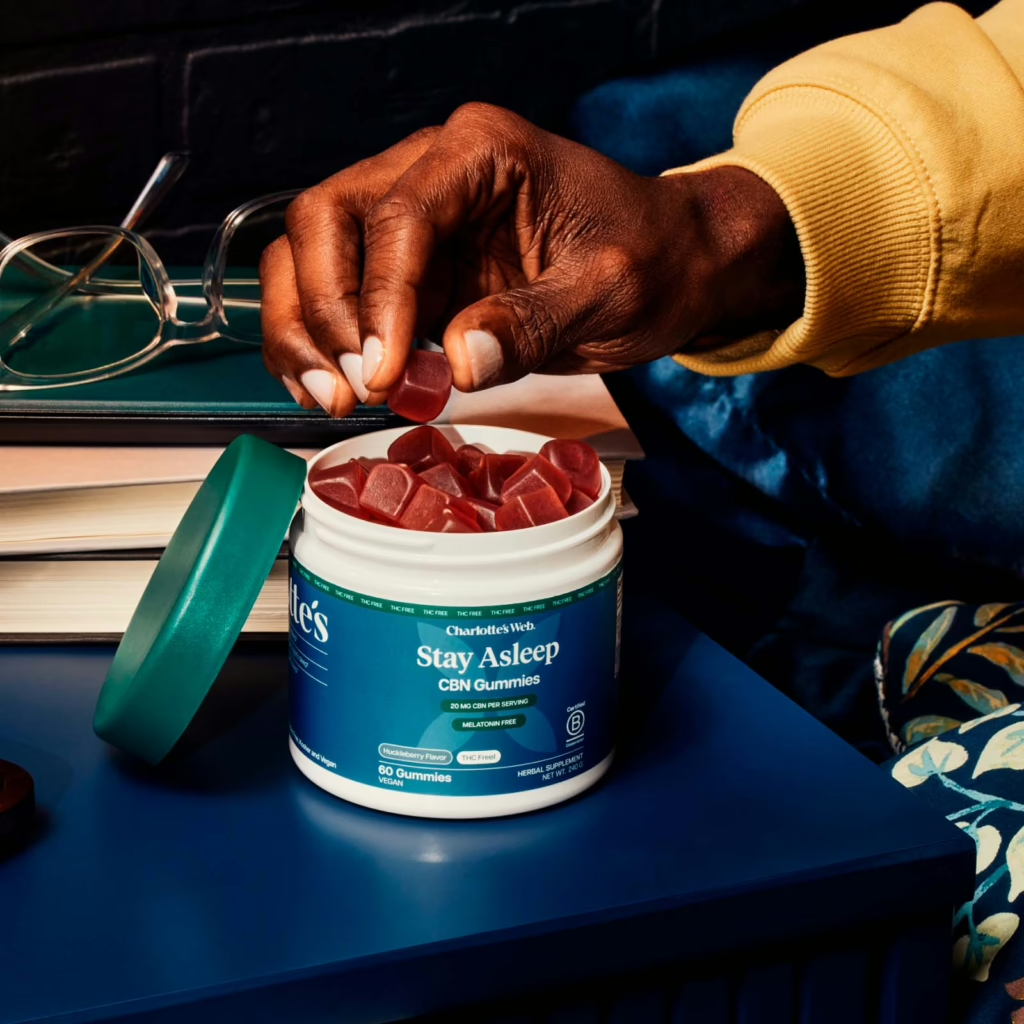
That is why you should review the label and the Certificate of Analysis (COA). The COA lists the cannabinoids detected and the amount of each. The COA information should match the label.
Some people assume the word “hemp” means the product is THC-free. Full spectrum CBD is made with a hemp extract and can contain a legal amount of THC.
Also, if you want to avoid a high, follow the label’s recommended serving size. Consuming more CBD gummies that contain THC means you are consuming more THC and not just more CBD or more of any other ingredients.
Making Sense of CBD Gummies and THC
CBD gummies that contain no THC should not make you high. It is THC that causes intoxicating effects. However, full spectrum gummies do contain THC. Some people are particularly sensitive to THC and may experience some degree of intoxication. Also, laboratory testing has shown that THC concentrations in a CBD product do not always match the label.
Be a careful consumer. Always check the THC content, compare the label information with the COA information, follow the recommended serving amount, and start with a low-potency product. It is also important to remember that CBD may produce side effects, such as drowsiness, so a non-intoxicating product can still present risks if you are a beginner. Before taking any CBD product, even if THC-free, check with your doctor first.
Sources
- https://pmc.ncbi.nlm.nih.gov/articles/PMC12653933/
- https://pmc.ncbi.nlm.nih.gov/articles/PMC7855189/#S12
- https://pmc.ncbi.nlm.nih.gov/articles/PMC2219530/
- https://pmc.ncbi.nlm.nih.gov/articles/PMC5628563/
- https://www.frontiersin.org/journals/pharmacology/articles/10.3389/fphar.2020.618184/full
- https://pubmed.ncbi.nlm.nih.gov/40454463/
- https://pmc.ncbi.nlm.nih.gov/articles/PMC10824494/
- https://pmc.ncbi.nlm.nih.gov/articles/PMC9899037/#S16
Share this post
