

EFSA Sets Limit for Daily CBD Intake in Supplements
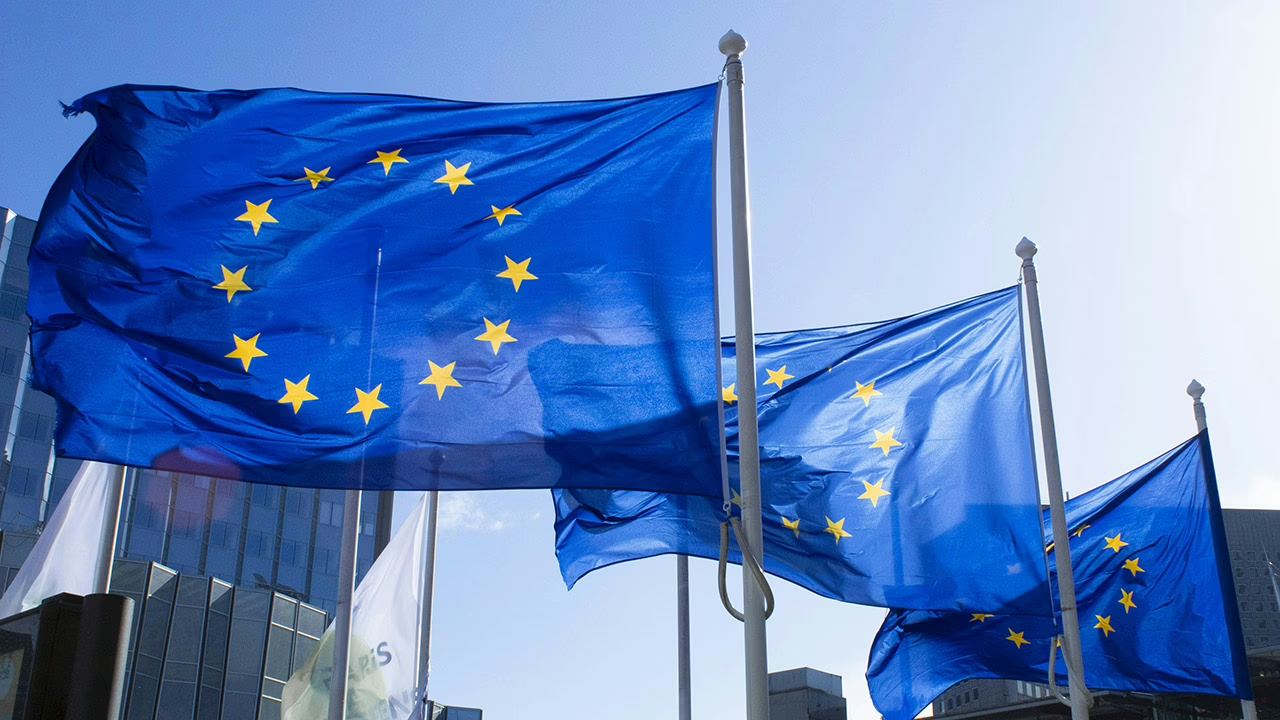
The EFSA (European Food Safety Authority) has issued a provisional limit on the consumption of hemp-derived CBD. It applies to food supplements containing CBD with at least 98% purity. The limit set is 2 mg per day for a 70-kg (154-pound) adult. This low limit means CBD manufacturers may need to rework many of their products to meet the requirement.
The published limit came with a warning that the EFSA could not establish a safe amount of CBD consumption for anyone under 25 years old, women who are pregnant or lactating, or anyone taking medication. The 2 mg per day is well below the limits set by other countries. For example, the UK limit is 10 mg per day, and the Canadian limit is 200 mg per day for up to 30 days.
By setting such a low limit, CBD brands may have to reformulate many of their products, which could significantly impact the entire CBD market. The EFSA considers CBD a novel food. A novel food is any food that does not have a history of consumption in the UK or the EU before May 15, 1997. It requires a safety assessment before the food item can be sold.
Interestingly, hemp-derived THC in food is not considered a novel food because hemp seeds have been eaten for many years. However, the European Union has set a limit on foods made from hemp seeds. The limit is 3 mg/kg for dry products, such as seeds, protein, and flour. Hemp seed oil is limited to 7.5 mg per kg.
It has taken three years for the EFSA to set this limit because they said there was not enough safety data to approve CBD as a novel food. This is why the limit is “provisional.” It means a conservative limit is being set without adequate data.
There have been 19 applications submitted on which the EFSA has taken no action. The EFSA wants more data on factors like drug interactions, toxicity, and long-term health effects. As it stands now, companies applying for permission to market CBD products must provide data on the potential effects of CBD in the body, including the nervous system, reproductive system and endocrine system.
It remains to be seen how companies can meet the low CBD limit and the data requirements. For the next steps, the EFSA says,
“EFSA will proceed with the risk assessment of each CBD novel food application based on the data made available by each applicant.”
The agency is holding an informational webinar in April 2026 to discuss how applicants can provide the missing data.
Share this post
