

Can You Give CBD to a Puppy?

Puppies are special, no doubt about it. They also have special considerations regarding food, medications, and supplements.
TL;DR (Too Long; Didn’t Read):
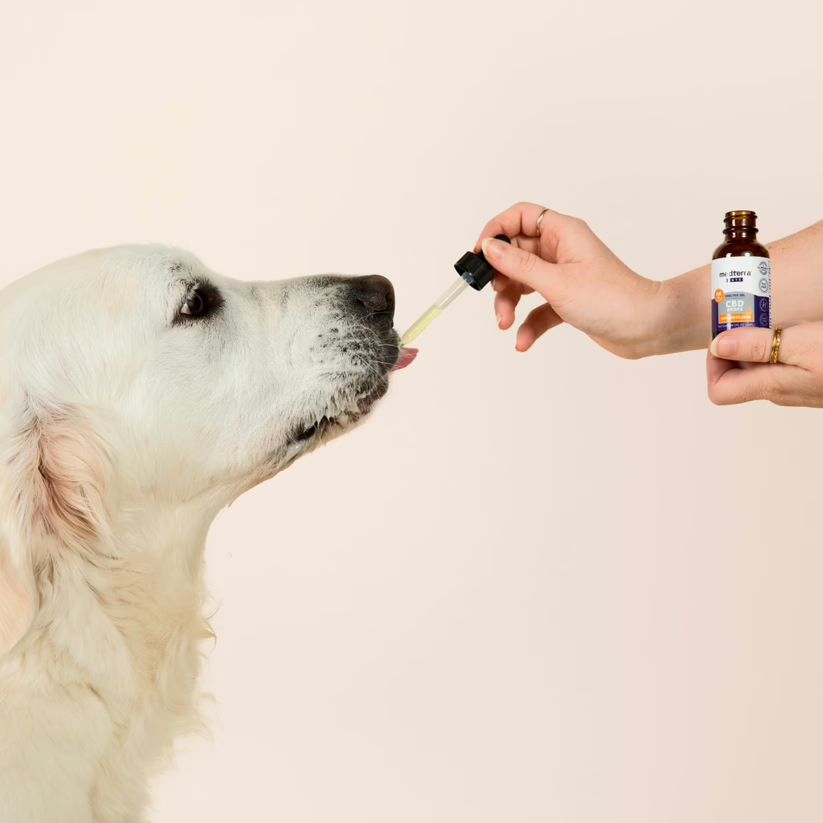
Puppies should not be given CBD without a veterinarian’s recommendation and supervision. Puppies are still developing, their weight changes quickly, and there is limited research on how CBD affects puppies specifically. The biggest safety concern is accidental THC exposure, because THC is toxic to dogs.
Table of Contents
- Can You Give CBD to a Puppy?
- Lack of Scientific Studies for Puppies
- Is CBD Approved for Puppies?
- Why You Should Talk to a Veterinarian First?
- How to Read a Pet CBD Certificate of Analysis?
- Why Human CBD Products Are Not Safe for Puppies
- What to Ask Your Veterinarian Before Considering CBD
- When You Should Not Give CBD to a Puppy
- In Conclusion
- Sources
Can You Give CBD to a Puppy?
CBD supplements may be suitable for some adult dogs, but should be used with extreme caution in puppies. Veterinary supervision is highly important when considering CBD for puppies because there is little known about how CBD and other supplements may affect a puppy’s growth and development.
Development
There’s a lot going on in a puppy’s growing body, no doubt about it. Along with increasing in size, all systems are also developing and maturing to become the fully functioning structures that we hope for in adulthood. What they’re fed, the medications they’re given, and even the amount of exercise a puppy gets can all have an impact on proper development.
Sensitivity
During their growth phase, a puppy’s systems are also highly sensitive; just try abruptly changing your puppy’s food, and the resulting diarrhea will show you exactly what I mean. Pet CBD products are formulated for adult dogs, so giving these same products to puppies can have increased, unwanted, and unpredictable effects.
Lack of Scientific Studies for Puppies
CBD is increasing in popularity for pets due to scientific evidence of its benefits. However, there is currently a very limited amount of research regarding CBD use in puppies. Without fully understanding how CBD affects puppies in the short- and long-term, it should be used with extreme caution and veterinary guidance.
Is CBD Approved for Puppies?
The FDA has not approved CBD or cannabis-derived products for use in animals. This means pet owners should not assume that a CBD product is proven safe or effective for puppies simply because it is sold online.
Why You Should Talk to a Veterinarian First?
Everything you feed a puppy has the potential to impact regular growth and development, potentially altering their health in adulthood. Even natural substances, such as CBD, may have effects that we aren’t aware of in their growing bodies, so veterinary guidance is highly recommended when thinking about CBD for puppies.
CBD Uses in Puppies
Puppies are not just small adult dogs; they’re complex and unique in their own right. Though there’s a long list of potential benefits from CBD for dogs, that list doesn’t necessarily translate into puppy needs. Before considering CBD for puppies, speak to your vet to ensure that the benefits you’re looking for are practical and feasible in a puppy.
Medications, Dosage, and Others
When considering giving CBD to a dog, it isn’t just about the potential benefits. You also need to consider the dog’s age, weight, health condition, and other medications they may be taking. Pet CBD products can affect a dog differently based on these considerations, so veterinary guidance is important to ensure the proper dosage and use case.
Differences in Products
There is currently no FDA regulation for supplements such as pet CBD products. That means no one is looking over the shoulders of supplement companies, ensuring that the ingredients are high-quality, safe, and effective. Instead, you’ll need to rely on your veterinarian’s advice and a CBD certificate of analysis to make sure the product you choose for your dog, or puppy if deemed appropriate, is a quality item.
How to Read a Pet CBD Certificate of Analysis?
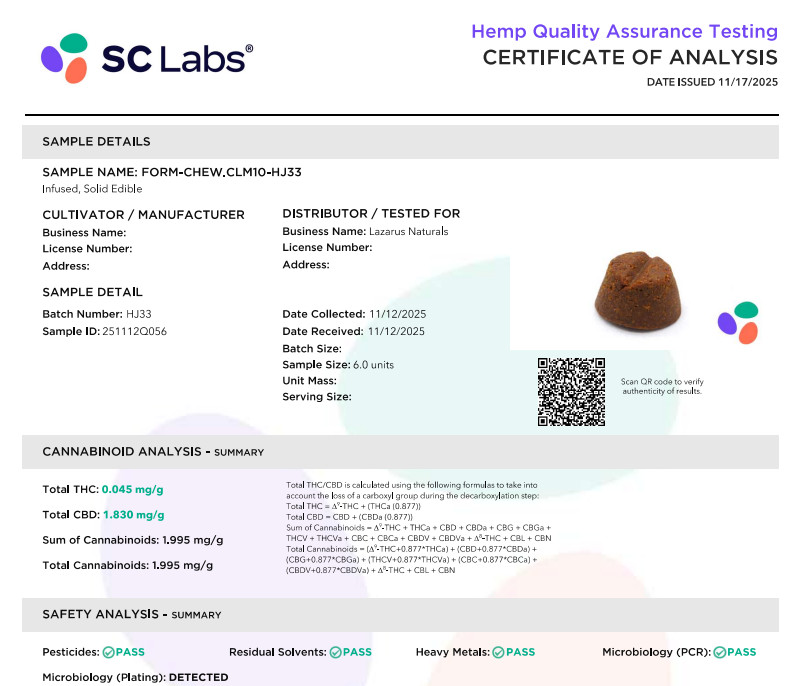
A Certificate of Analysis, or COA, is a lab report that shows what is in a specific CBD product. The following are some of the most important details to check when reading a certificate.
Match the Product Name
The first step is to ensure the COA matches the exact product you are considering. A lab report for a different CBD oil, treat, soft chew, flavor, or strength does not confirm what is in the product you plan to give your puppy.
Review the Report Date
The COA should include a report date. A recent batch-specific report is more useful than an old one.
Confirm the Lab Name
The COA should come from an independent third-party laboratory. Independent testing adds transparency because the results are not based only on the brand’s own internal claims.
Compare the CBD Amount With the Label
The COA should show the amount of CBD in the product. This may be listed as milligrams per serving, milligrams per milliliter, milligrams per gram, or as a percentage, depending on the product format.
Look for THC Results
The COA should clearly show Delta-9 THC, total THC, or both. For puppies, this is one of the most important parts of the report because THC exposure is a major safety concern for dogs.
Understand “ND” on a COA
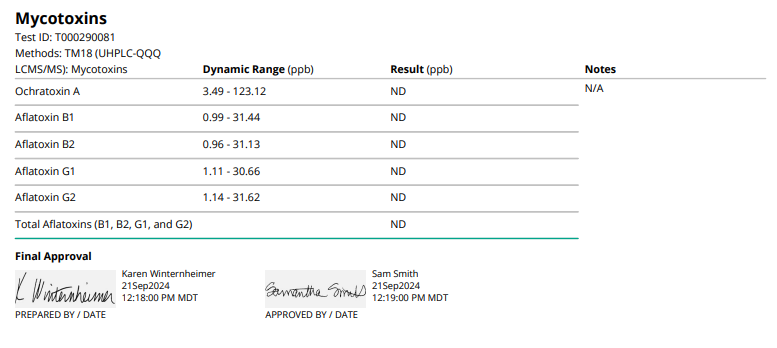
“ND” usually means “not detected.” This does not always mean a substance is at an absolute zero; it means the lab did not detect it above its testing limit.
Check for Other Cannabinoids
A COA may list cannabinoids such as CBD, CBG, CBN, CBC, and THC. This helps show whether the product matches its label, such as broad spectrum, full spectrum, or CBD isolate.
Review Contaminant Testing
There must be testing for heavy metals, pesticides, residual solvents, mycotoxins, mold, yeast, and other microbial contaminants. This is especially important for puppies because their bodies are still developing.
Look for “Pass” Results on Safety Panels
Some COAs use simple terms like “Pass” or “Fail” for contaminant testing. A “Pass” result means the tested substance was below the lab’s action limit for that category.
Why Human CBD Products Are Not Safe for Puppies
Just as puppies are not small adult dogs, they are also not small humans. Puppies, or adult dogs, should never be given human medication of any kind unless advised by a veterinarian.
➥ Dosage
The dose of human CBD products will be higher than that recommended for a dog. This may cause unwanted side effects or other issues.
➥ THC
CBD products are supposed to contain less than 0.3% THC (delta-9-tetrahydrocannabinol), the psychoactive component of Cannabis plants, but that doesn’t mean that all human products comply. According to Cornell College of Veterinary Medicine, dogs’ brains have more cannabinoid receptors in them, making them more sensitive to THC. Products that contain higher amounts of the compound can lead to THC toxicity.
➥ Other ingredients
Human CBD products aren’t just CBD. They often contain additional ingredients, such as flavors and sweeteners, which could be toxic to dogs. Xylitol, a popular low-calorie sweetener option, is very toxic to puppies and adult dogs.
What to Ask Your Veterinarian Before Considering CBD
Getting your veterinarian in on the CBD discussion is essential when it comes to puppies, but it can be hard to know where to start this conversation. Some potential questions you’ll want to ask them include:
1. What can CBD do for my puppy?
CBD has many potential benefits for adult dogs, but that doesn’t mean it can do the same for puppies. Talk to your veterinarian about what you want your puppy to get out of CBD to see if it’s the right choice for them. They will be able to consider your puppy individually to ensure that CBD is an appropriate and safe option.
2. What CBD products are available for puppies?
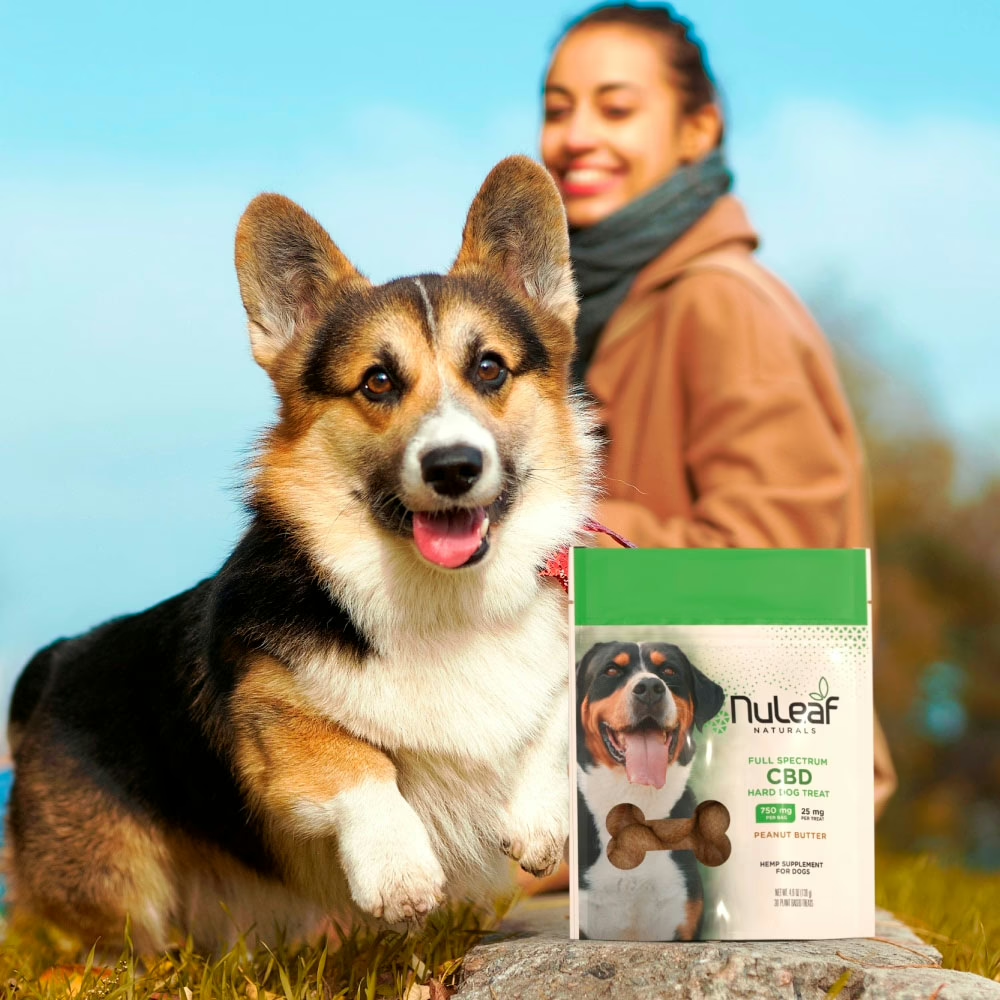
Veterinarians have their list of favorites when it comes to pet products, so they will likely have a favorite CBD option if you both decide that CBD will work for your puppy. They can help ensure the product is effective and safe, as well as determine the proper dosage.
Pet products may come in several forms, including CBD oils, treats, and soft chews. Each format has different advantages and limitations, so the best option depends on your puppy’s size, age, health status, and your veterinarian’s recommendation.
CBD oil is often the most flexible format because it can be measured more precisely than a treat or chew. This may be especially important for small puppies, but it also means owners need to be very careful with the product concentration and serving instructions.
CBD treats are convenient because they look and feel familiar to dogs. However, treats may be harder to divide accurately, and the added ingredients should be reviewed to make sure they are appropriate for a puppy.
Soft chews are another common option for pet CBD products. They may be easier for some dogs to eat than hard treats, but the serving size still needs to match the puppy’s needs and should be discussed with a veterinarian first.
3. What can I expect to see when my puppy takes CBD?
CBD products can vary in the amount of time until you see results, so you’ll want to set your expectations accordingly by asking your vet when you should see the benefits.
You’ll not only want to be aware of the potential benefits of CBD but also of the potential side effects. Being able to recognize when a CBD product isn’t right for your dog is important to ensure their safety.
Call a veterinarian immediately if your puppy has extreme sleepiness, vomiting, incoordination, drooling, tremors, seizures, low body temperature, unusual agitation, or collapse after possible CBD exposure.
4. What is the appropriate dose, and how to transition off of CBD?
Your vet will determine the dose that’s appropriate for your dog’s size and health condition. They can also guide you in transitioning off of CBD if your dog isn’t benefiting as you’d hope or you’re noticing unwanted side effects.
When You Should Not Give CBD to a Puppy
In some situations, CBD products should be avoided entirely unless a veterinarian specifically recommends it.
Avoid giving CBD to a puppy in these situations:
⛔ Your puppy is vomiting, has diarrhea, is not eating, or seems weak.
⛔ Your puppy is extremely sleepy, unsteady, trembling, or unusually agitated.
⛔ Your puppy may have eaten a human CBD product
⛔ The CBD product is made for humans, not pets.
⛔ The product does not have a batch-specific Certificate of Analysis, or COA.
⛔ Your puppy is taking medication.
⛔ Your puppy has liver concerns or abnormal bloodwork.
⛔ Your puppy is recovering from surgery, illness, or injury.
⛔ Your puppy is very young, underweight, fragile, or a toy breed.
In Conclusion
CBD may be a good option for some adult dogs, but it should be used with extreme caution in puppies. Veterinary guidance is an important part of using CBD in any dog, but especially in puppies, to determine whether it’s appropriate and safe, as well as the proper dose and product.
Sources
- https://pmc.ncbi.nlm.nih.gov/articles/PMC11755934
- https://pmc.ncbi.nlm.nih.gov/articles/PMC5109620
- https://www.vet.cornell.edu/departments-centers-and-institutes/riney-canine-health-center/canine-health-information/Cannabis-THC-intoxication-in-dogs
Share this post
