

What the Grapefruit Warning on CBD Labels Means
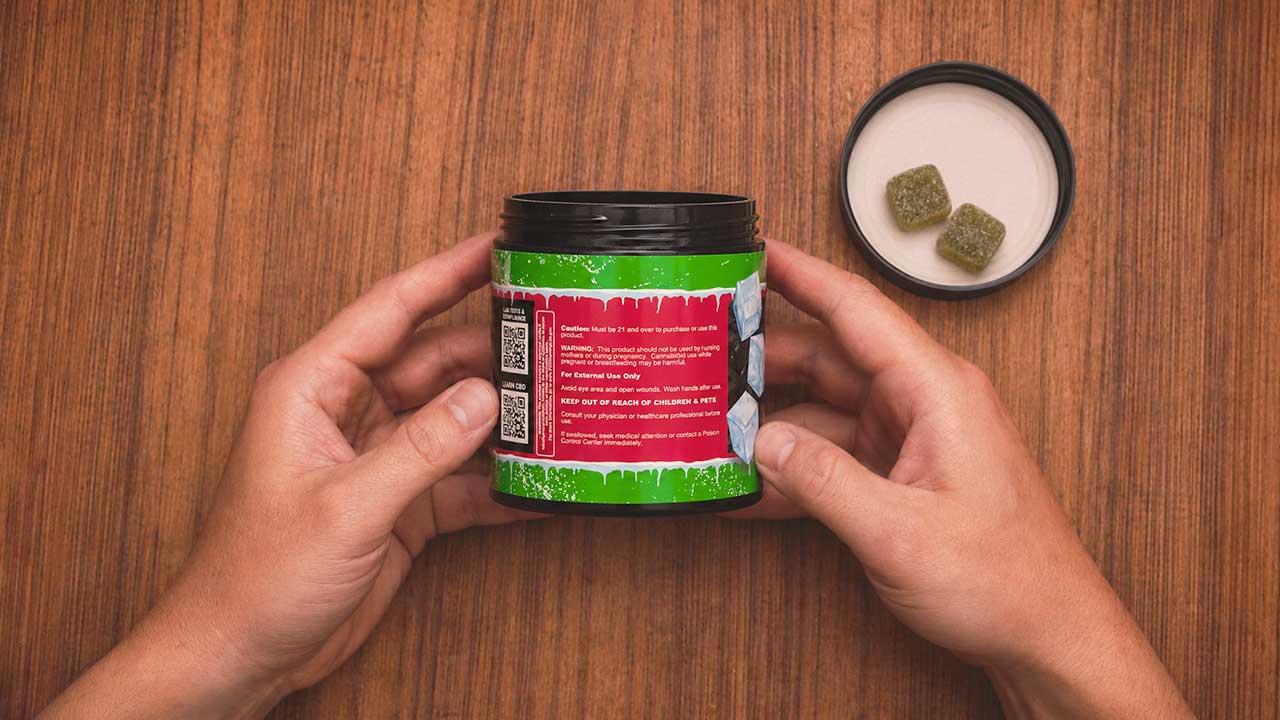
CBD products are now widely available in many forms, including gummies, tinctures, capsules, topicals and more. Some of these products contain a grapefruit warning on the label. This may be confusing, especially when the CBD product does not contain grapefruit. The warning is necessary because grapefruit compounds called furanocoumarins, along with CBD, can inhibit CYP enzymes that help break down some medications. Taking both together enhances the potential interactions, causing the medications to build up or decrease in the body.

TL;DR (Too Long; Didn’t Read):
A grapefruit warning on a CBD product label means CBD may interact with certain medications in a similar way by affecting liver enzymes that metabolize drugs. This can change medication levels in the body, so people taking medications should be especially careful with CBD products.
Table of Contents
What is a Grapefruit Warning?
Consumers often misunderstand the grapefruit warning on a product label. The Food and Drug Administration (FDA) requires this warning on some prescription and over-the-counter drugs, most of which are taken by mouth. The reason a warning is required for drugs is that they are metabolized by liver enzymes, and compounds in grapefruit juice can interfere with this process by blocking enzymatic activity. The interaction may increase or decrease medication levels.
Grapefruit juice, grapefruit, and some other citrus fruits with similar compounds are best known for causing too much of a drug to enter the bloodstream because the drug is not properly broken down. However, in some cases, some drugs reach the body’s cells via transporters. Grapefruit juice can also block the transporters, making the drug less effective. In that case, not enough medication is processed in the body.
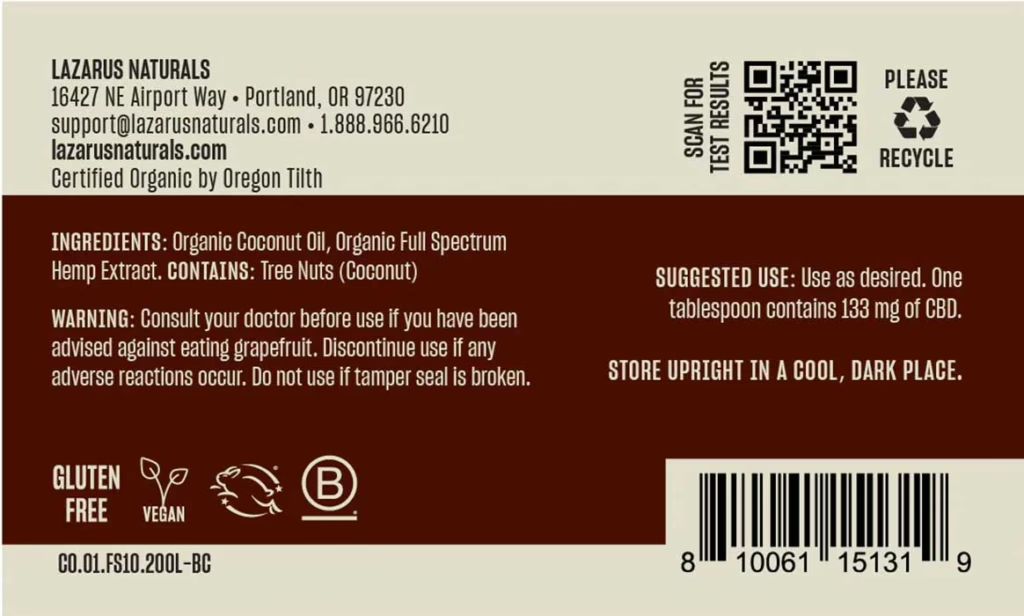
The grapefruit wording varies for products. For example, a CBD oil label may say, “Consult your doctor before use if advised against eating grapefruit.”
Why is there a grapefruit warning on products when CBD is not on the FDA’s drug list or when the product does not contain grapefruit juice or extract? The reason has to do with the potential for CBD to interact with certain medications in a way similar to grapefruit, since the cannabinoid is processed in the liver.
Why Does Grapefruit Interact With Some Medications?
Grapefruit interacts with some medications by inhibiting the enzyme system responsible for metabolizing the drugs. Specifically, it inhibits CYP3A4, an essential enzyme in the CYP450 system. There is a high concentration of this enzyme in the liver and intestines. A drug is metabolized (broken down) by CYP 3A4 before it enters the bloodstream. Grapefruit juice reduces CYP3A4 activity, which can increase the drug’s bioavailability, meaning the drug can build up in the system. Only prescription and over-the-counter drugs metabolized by CYP3A4 are of concern.
However, it is not just grapefruit that presents a risk. It is any fruit that has compounds called furanocoumarins. Furanocoumarins are natural plant substances found in some citrus fruits, like grapefruits, limes, Seville oranges, pomelos, etc. The highest concentrations are usually found in peels and juices, and these can cause drug interactions. Furanocoumarins are the compounds in the citrus fruits that can neutralize the digestive system CYP enzymes. The drug reaches the liver and is not broken down, entering the bloodstream in an undesirable form.
Now consider the action of CBD and CYP enzymes. Researchers have also found interactions between CBD and medications. In fact, CBD is the cannabinoid that interacts most strongly with the CYP450 enzymes. It can act as an inhibitor or an inducer of various enzymes. The result is that taking CBD with foods or drinks containing furanocoumarins, like grapefruit juice, creates a higher risk of a significant interaction with some medications. The impact on the enzymes is multiplied.
Does the Warning Mean the Product Contains Grapefruit?
A grapefruit warning on a product does not mean it contains grapefruit. It is a safety warning, advising consumers not to consume grapefruit, grapefruit juice, or other citrus fruits containing furanocoumarins while taking the product.
A warning lets the consumer know that CBD interacts with the body in ways that may affect medication metabolism. So, even a CBD product with no grapefruit flavoring, grapefruit extract, or other citrus ingredients may have a grapefruit warning. The warning concerns the potential impact of CBD on liver metabolism.
On the other hand, some CBD products do contain grapefruit essential oil or flavoring. The only way to know if the grapefruit warning concerns a grapefruit ingredient or is a warning for potential metabolism issues is to read the ingredient label.

Which CBD Product Types Are More Likely to Show This Warning?
In general, any CBD product that is swallowed may have a grapefruit warning. Any substance that is swallowed will go through the digestive system and the liver the same way medications do.
✓ CBD Oils
CBD oils and tinctures are some of the most common CBD products that have a grapefruit warning. CBD and other cannabinoids are absorbed throughout the system, reaching the bloodstream and potentially affecting liver enzymes. The higher the CBD potency, the more likely there will be a grapefruit warning.
✓ CBD Softgels
Capsules and softgels are digested, so the CBD reaches the liver. This creates a risk of drug interactions.
✓ CBD Edibles
CBD is also ingested when taking gummies and edibles. CBD is metabolized through the liver. The higher the potency, the greater the risk of drug interactions.
✓ Full Spectrum CBD Products
Brands may add a grapefruit warning to any of their full spectrum CBD products because of continued research on the entourage effect. A full-spectrum product has all of the hemp plant’s cannabinoids, terpenes, and flavonoids. There is a risk of additional metabolic effects as the various compounds work together synergistically.
✓ Beverages and Drinks
CBD drinks are also ingested directly into the stomach. Anything that is digested will eventually reach the liver.
Other Warnings on Product Labels
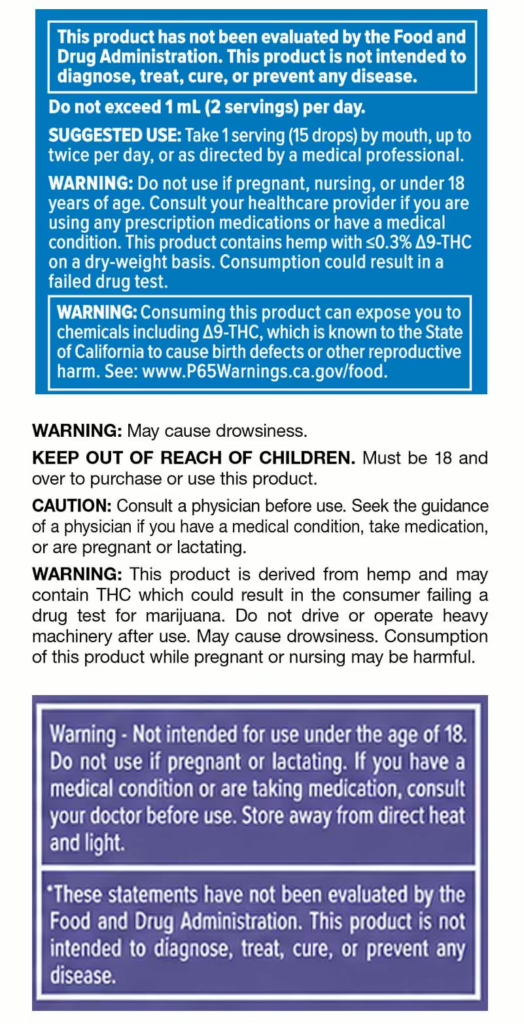
There are other warnings found on CBD product labels.
- May cause drowsiness or sleepiness.
- Do not use if pregnant or breastfeeding
- May interact with a medication (specific drugs are named)
- If you suspect a medical condition or are taking medications, consult a physician before use.
- Intended only for adults over 18 (or 21) years old
- Contains THC, so do not use if drug tested
- Product not evaluated by the U.S. FDA and not intended to diagnose, treat, cure or prevent disease
- Keep out of reach of children and pets
- Discontinue use if experiencing any adverse reactions
- Do not use if the tamper-proof seal is broken
State laws may require other warnings.
Importance of Reading Labels Thoroughly
It is important to take the warning on CBD supplements seriously. A grapefruit warning on a CBD product is giving notice that CBD may interact with some medications. It does so by affecting liver enzymes responsible for metabolizing drugs in a way similar to that of grapefruit. There may also be a grapefruit warning on the prescription medicine’s package or bottle. Always consult a doctor before taking CBD if taking a medication, prescription, or non-prescription medication. It is just a matter of safety.
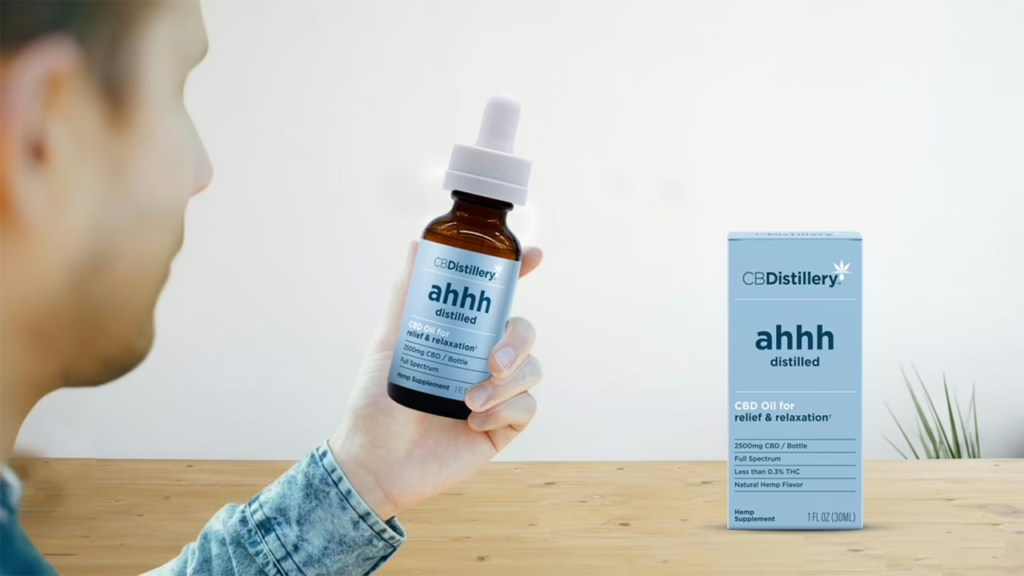
How to Read CBD Labels?
Sources
- https://www.fda.gov/consumers/consumer-updates/grapefruit-juice-and-some-drugs-dont-mix
- https://pmc.ncbi.nlm.nih.gov/articles/PMC2147024/
- https://www.cancer.gov/publications/dictionaries/cancer-terms/def/furanocoumarin
- https://pmc.ncbi.nlm.nih.gov/articles/PMC9871609/
- https://pmc.ncbi.nlm.nih.gov/articles/PMC10452568/
Share this post
