

Does Health Insurance Cover CBD?

The demand for CBD continues to increase as consumers discover that the hemp-derived cannabinoid promotes wellness in various ways. People take CBD for many reasons, including as part of everyday wellness routines, for relaxation, post-exercise recovery, and support for general balance and rest. Naturally, people want to know if there is CBD coverage by insurance. Generally, CBD products are not covered by health insurance plans, except for Epidiolex. However, there may be changes on the horizon due to a federal Medicare pilot program.
TL;DR (Too Long; Didn’t Read):
CBD is not a covered product for most health insurance plans. Over-the-counter (OTC) products are excluded because they do not meet the standards for prescription drugs. The only CBD drug covered by health insurance is the drug Epidiolex, an FDA-approved prescription medication made with pure cannabidiol (CBD).
Table of Contents
What Does CBD Mean in Insurance Terms?
Insurers recognize three types of products used for doctor and self-prescribed treatments.
1. Prescription drugs
Prescription drugs are regulated by the Food & Drug Administration (FDA). The drugs go through a New Drug Application process that involves a review of all the available data, data analytics, and other medical information about the drug’s behavior in the body. Insurance companies cover prescription drugs.
2. Regulated Over-the-Counter (OTC) drugs
OTC drugs are FDA-regulated, but through a different process than prescription drugs. The OTC Drug monographs address the drug dose, acceptable ingredients, formulations, and labeling. The FDA must approve changes to the monograph. Most insurance companies exclude OTC drugs from coverage unless a doctor prescribes them or an insurance plan offers benefits that allow the purchase of OTC drugs.
3. Supplements and wellness products
Most of the time, vitamins and herbal supplements are not covered by insurance. There are cases where a doctor might prescribe a supplement as part of the treatment plan, and insurance might cover the cost with a pre-approval. For example, the ACA (Affordable Care Act) requires participating insurance companies to cover preventive services, like folic acid supplements for pregnant women.
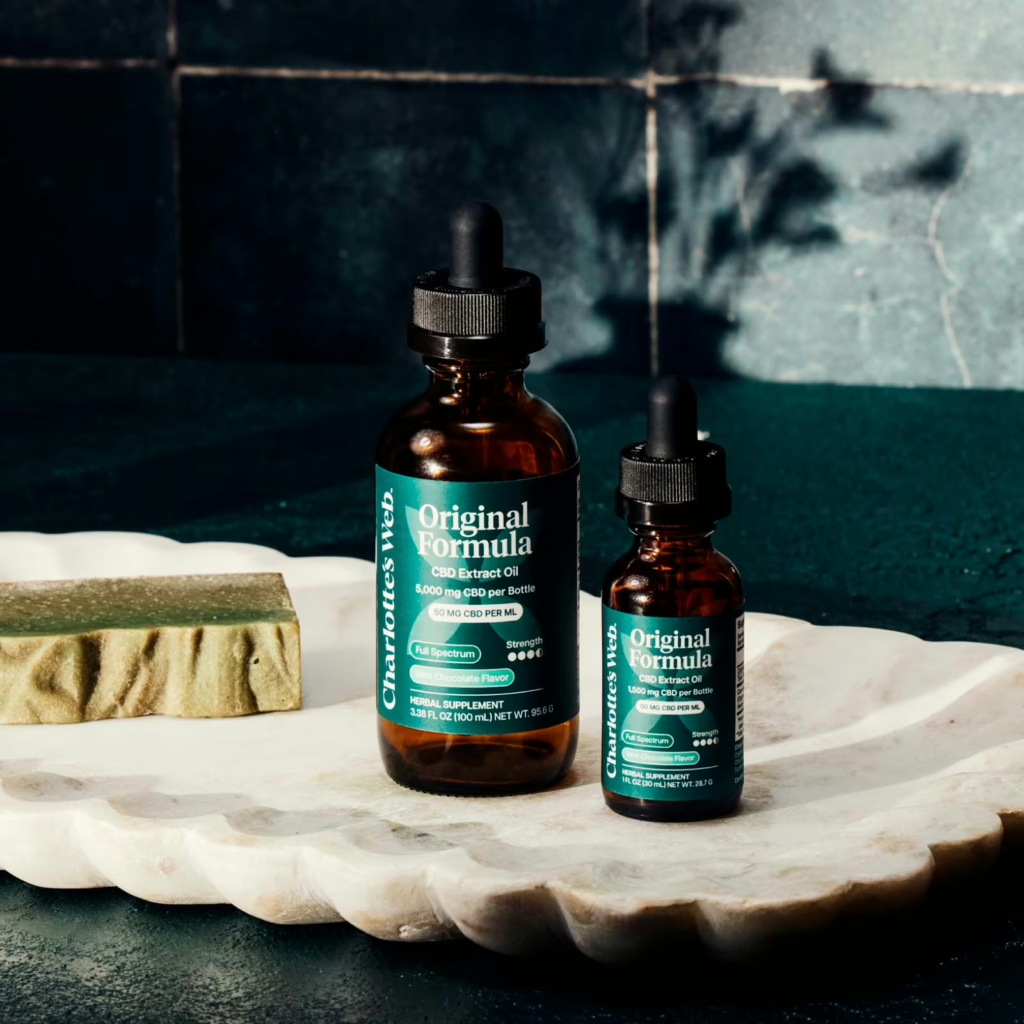
Currently, most CBD oils, edibles, and topicals are considered over-the-counter (OTC) products. CBD products are not government-regulated, so insurance companies usually treat them the same as supplements.
The one exception is FDA-approved Epidiolex, mentioned earlier. Since it is a prescription medication approved for treating disorders, most insurance plans will cover it. Epidiolex has a highly purified form of CBD and no THC. It is almost 100% pure CBD.
Why Don’t Most Plans Cover CBD Products?
Health insurance companies adhere to strict standards to determine if they will cover a treatment, including medications and other substances. Over-the-counter CBD insurance coverage is rare for several reasons.
➥ The FDA has not approved CBD products for medical use. The agency does not believe enough clinical research is available to demonstrate its effectiveness and safety. Insurance companies also require extensive clinical-based evidence before approving any treatments.
➥ Consumers view CBD products as supplements or wellness products. The FDA says CBD products cannot be sold as supplements, yet they are sold over-the-counter in various places, from pharmacies to grocery stores. This creates a legal regulatory dilemma that the insurance companies do not want to get involved in.
➥ State laws concerning THC and hemp-derived CBD products are constantly changing, and many do not adhere to federal law.
➥ The Federal government has kept cannabis-derived products containing THC as a Schedule I drug. This may be changing soon, but currently, THC is considered illegal at the federal level. Insurance companies are unlikely to cover anything the federal government considers illegal.
➥ Insurance companies usually cover only standardized products with consistent potency, quality, and dosage. Since the CBD market is unregulated, there is no guarantee of standardization.
➥ Insurance companies are designed to cover doctor-ordered treatments, including prescription drugs. CBD products do not require a prescription.
Can you use HSA/FSA for CBD? CBD products are not eligible for reimbursement because the IRS has not published guidance. Since they are not FDA-approved treatments and the IRS has not allowed eligibility, using the funds to buy CBD is usually not allowed. Epidiolex is the only CBD drug that is eligible since it is FDA-approved and a prescription drug.
Medicare and Government Plans
Currently, Medicare does not cover CBD. However, this may be changing. President Trump signed an Executive Order in December 2025 ordering the Justice Department to go through the process of making marijuana a Schedule III drug, which a doctor can prescribe. If marijuana is a prescription drug, insurance companies can cover it.
This initiative also included a Medicare pilot program, which will allow Medicare to cover doctor-recommended hemp-derived CBD products.
Dr. Oz, administrator of the Centers for Medicare & Medicaid Services (CMS), will oversee the pilot program. The pilot program will allow the insured to receive up to $500 annually in Medicare coverage for hemp-derived products. Medicare Advantage insurance companies have agreed to cover CBD for the pilot program. It should be noted that only hemp-derived products that meet regulatory standards will be covered, meaning OTC CBD products will not be included.
The pilot program is expected to begin by April 2026. It will include collecting data to provide evidence for FDA assessment of products, developing a dosing framework, minimizing risks, and providing labeling for the general population. What still needs to be specified is which health conditions will qualify for Medicare coverage.
Will CBD Ever Be Covered by Insurance?
Health insurance coverage for CBD products is very limited, and that is unlikely to change in the near future. The consumer must pay for retail CBD products. Only Epidiolex is a prescription CBD medication that the FDA has approved.
However, some events could increase insurance coverage. For example, coverage could expand if the FDA approved more CBD-based drugs, federal policy changes support CBD as a therapeutic, or the Medicare pilot program is expanded to include more people. Also, more clinical research data will guide the FDA in its decision-making concerning the compound. CBD coverage by insurance could gradually expand, but it will take a convergence of regulatory changes and further research.
Sources
- https://www.fda.gov/drugs/information-consumers-and-patients-drugs/fdas-drug-review-process-ensuring-drugs-are-safe-and-effective
- https://www.fda.gov/drugs/frequently-asked-questions-popular-topics/prescription-drugs-and-over-counter-otc-drugs-questions-and-answers
Share this post
